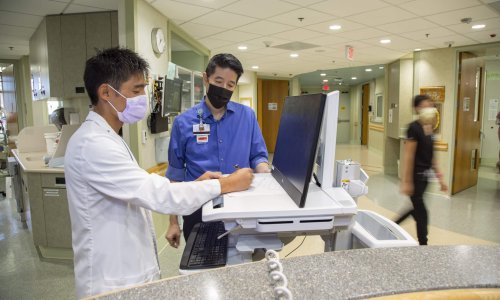
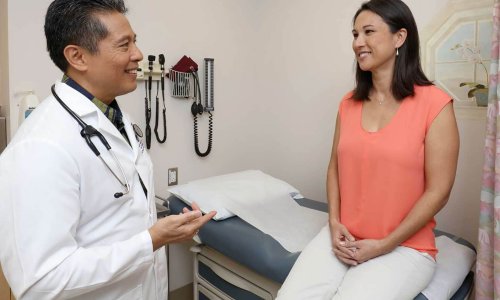
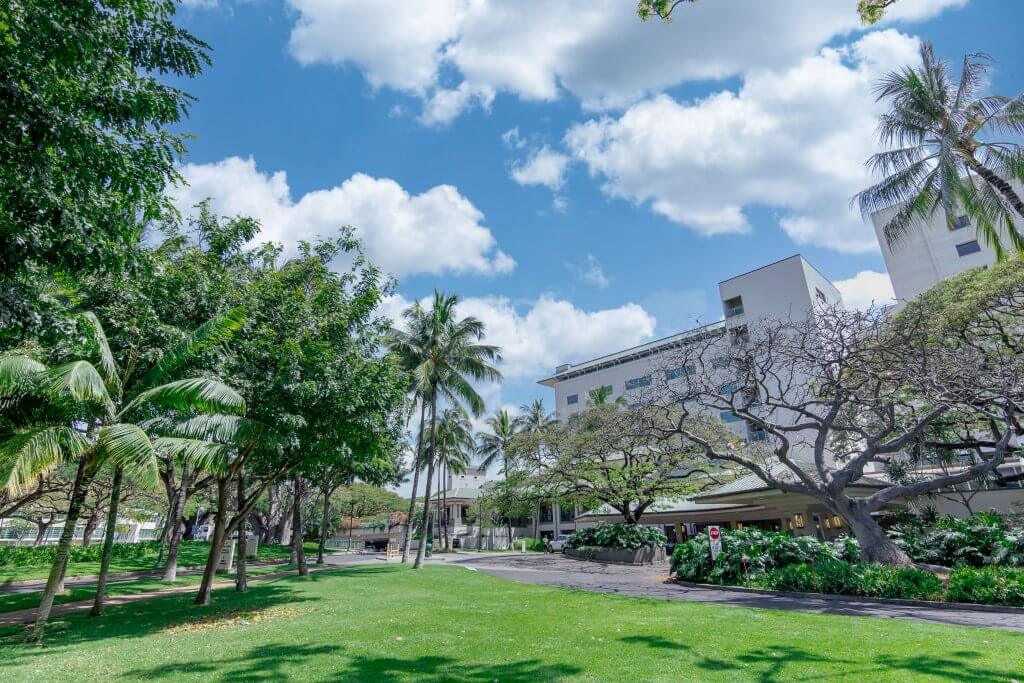
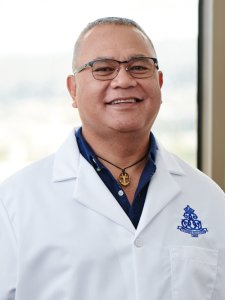
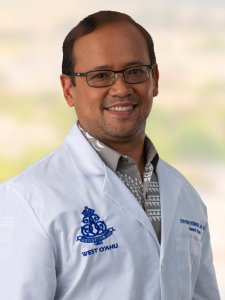
Welcome to the Hernia Center at The Queen’s Medical Center. Our surgeons specialize in all types of hernia repair using either an open technique, laparoscopic or robotic approach.
The Queen’s Medical Center
(Manamana)
Physicians Office Building 2
1329 Lusitana St., Suite 207
Honolulu, HI 96813
Phone:
808-686-4600
Fax:
808-686-2134
Hours:
Monday – Friday, 8am – 4:30pm
The Queen’s Medical Center – West O‘ahu
Clinical Service Center, Suite 150
91-2141 Fort Weaver Rd.
‘Ewa Beach, HI 96706
Phone:
Fax: 808-686-2124
Phone:
808-691-3020
Fax:
808-686-2124
Hours:
Monday – Friday, 8am – 4:30pm
Welcome to the Hernia Center at The Queen’s Medical Center. Our surgeons specialize in all types of hernia repair using either an open technique, laparoscopic or robotic approach.
A hernia is an abnormal bulge in the abdominal wall or groin area through a weakness in the muscular wall.
It is estimated that 200,000 hernias are repaired in the United States each year. Usually, hernia surgery is performed on an outpatient basis and returning to normal activity is quicker with minimally invasive techniques. Each year, surgeons at The Queen’s Medical Center perform many complex hernia repairs and are experts in this field, affording them expertise in both common and complex repairs. Our multidisciplinary group offers patients a comprehensive evaluation to determine the best surgical procedure to suit their need and to avoid complications or recurrence.
Our mission is to achieve excellence in clinical care by providing a patient-centered treatment plan, which includes comprehensive management through a multispecialty approach, and to achieve excellence in the advancement of education and research in hernia repair.
Our surgeons’ extensive experience with initial, complex and recurrent hernias offers the patient a variety of surgical options from expert surgeons. We also offer a multidisciplinary approach to patient care with general, plastic and trauma surgeons.
A hernia occurs when the inside layers of the abdominal wall weaken then bulge or tear. The inner lining of the abdomen pushes through the weakened area to form a balloon-like sac. This can cause a loop of intestine or abdominal tissue to slip into the sac, causing pain and other potentially serious health problems.
Symptoms may include a noticeable protrusion in the groin area or abdomen, feeling pain while lifting, an aching sensation, and/or a vague feeling of fullness.
If a hernia causes no symptoms, you and your physician may choose to wait to see if any changes occur but most often surgery is required. Your surgeon will go over the procedure in detail with you.
Between one to two hours.
It depends on what type of work you do and which type of surgery you have. Usually, open repair patients may go back to office work within 1 week depending on how well you are feeling. Similarly, with laparoscopic repair, you may go back to office work within a few days. If heavy lifting is required (greater than 20 lbs.), patients who have had an open repair may have restricted activity for 4 to 6 weeks, whereas patients who have had a laparoscopic repair usually can begin heavy lifting in 2 weeks.

Approximately 5 to 10% of hernias are estimated to recur depending on the type.